Sculpture Encounters
São Paulo, Brasil, 2022.
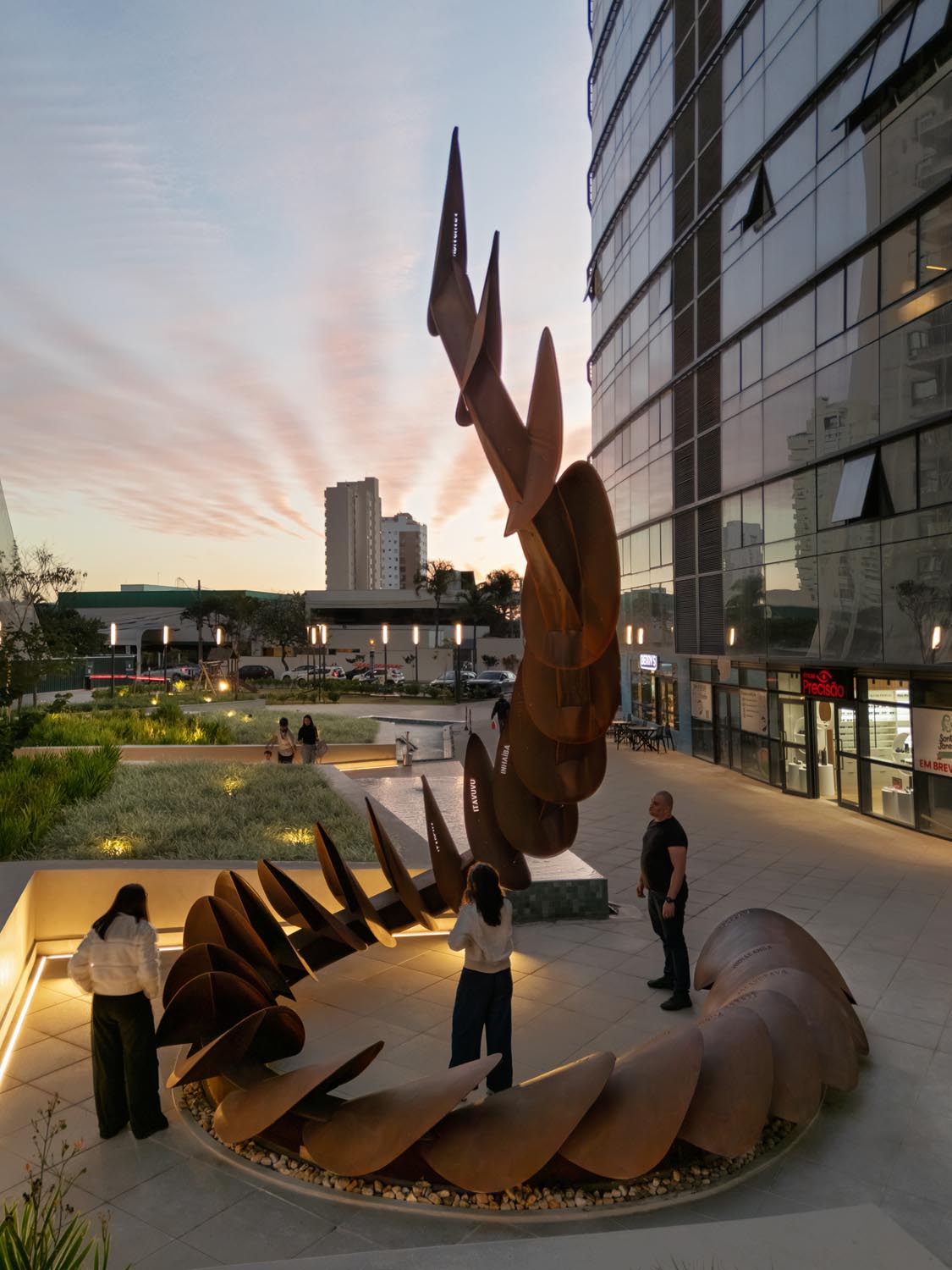
We were inspired by the concept of the wheel and the Brazilian desire to connect with the other. The poet and naturalist José Bonifácio called this relation of “amalgam theory”. In a circle or ciranda, individuals are equal, they create a unique organism, but at the same time they are different from each other. This difference is a reflection of the Brazilian cultural diversity, whose people are a mixture of indigenous, Afro-descendants and descendants of European, Asian and Middle Eastern immigrants.
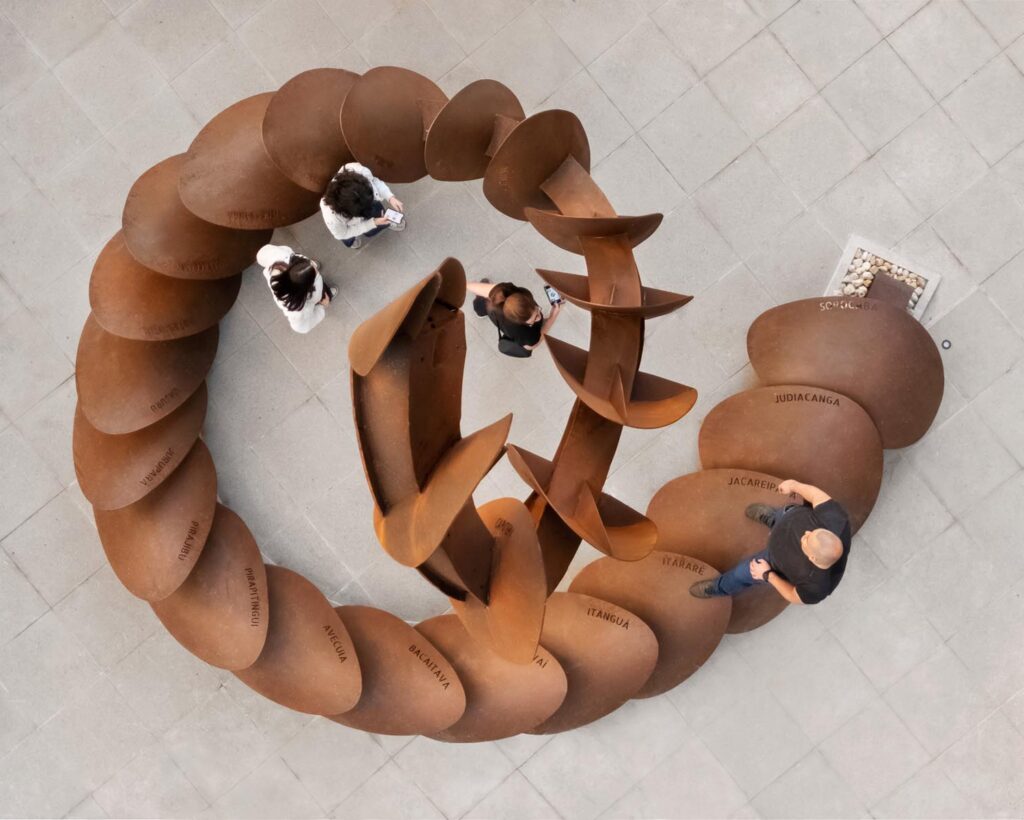
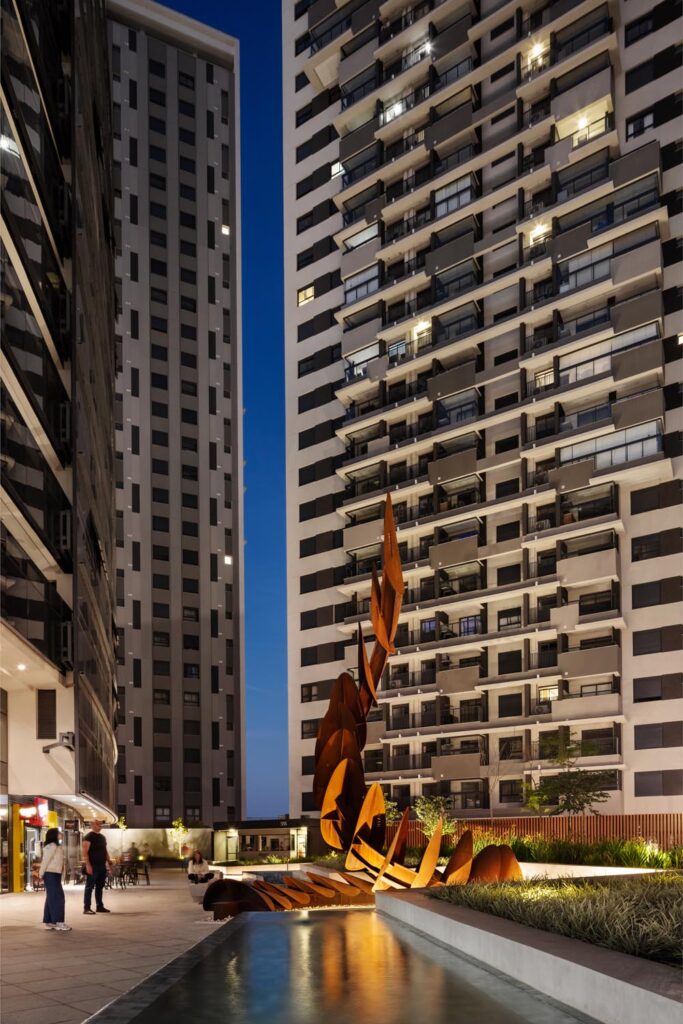
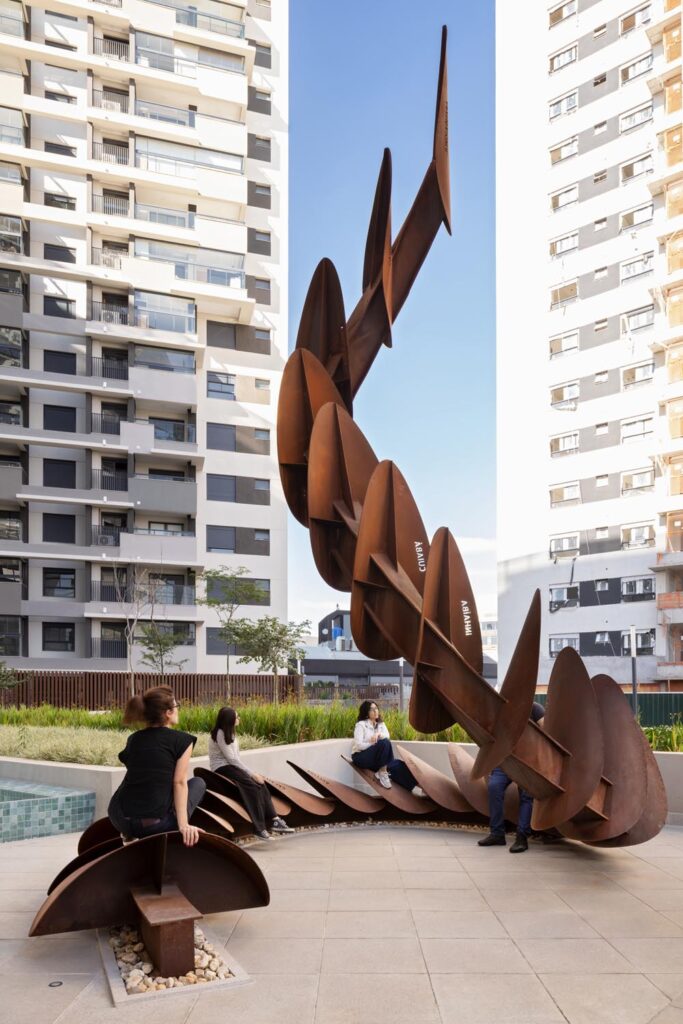
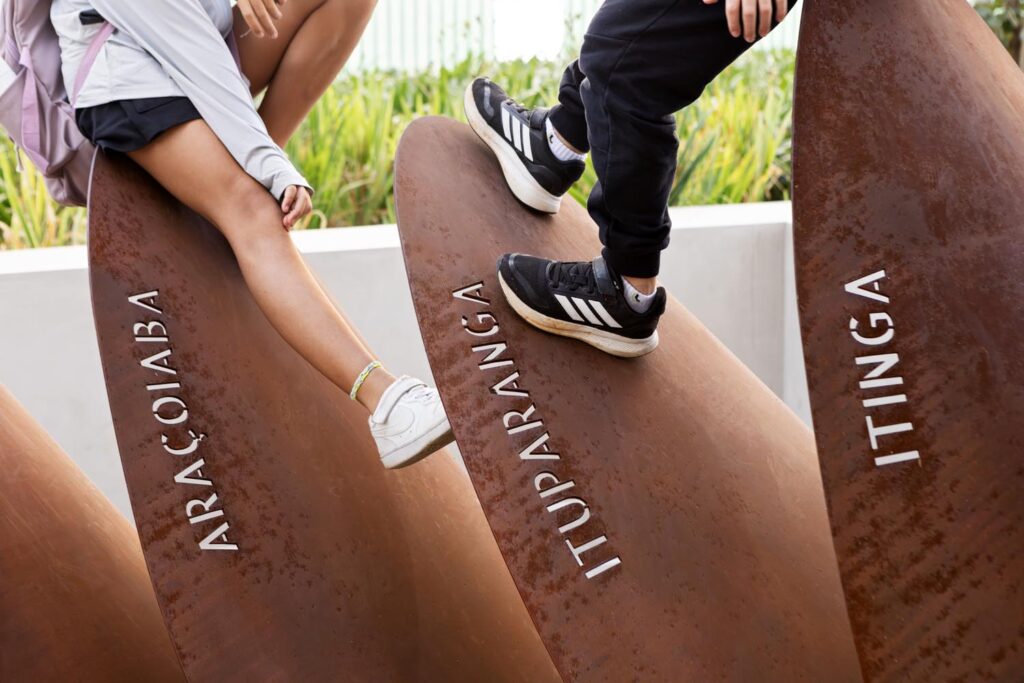
The sculpture will be a landmark for the square and for Sorocaba, becoming a focal and meeting point. At the same time that it is contemplative, it is also functional, becoming a hybrid between street furniture and work of art.
Design with code.
Parametry is a system for reproducing computerized forms, from matrices (scripts) that reproduce scaled readings from an initial module, generating identical replicas and/or with variations in size. It is necessarily a process that starts from a design created on the computer. The software is programmed to replicate this shape in series and at scale from the definition of this matrix (parameter), which can (and should) have modulation and size variations.
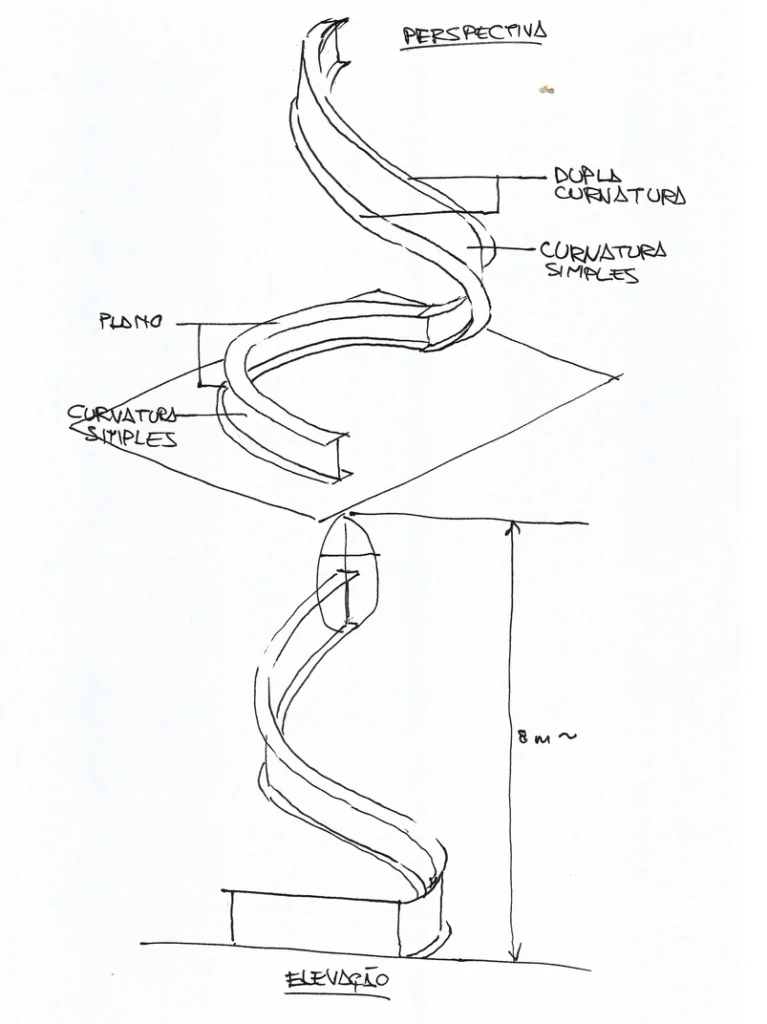
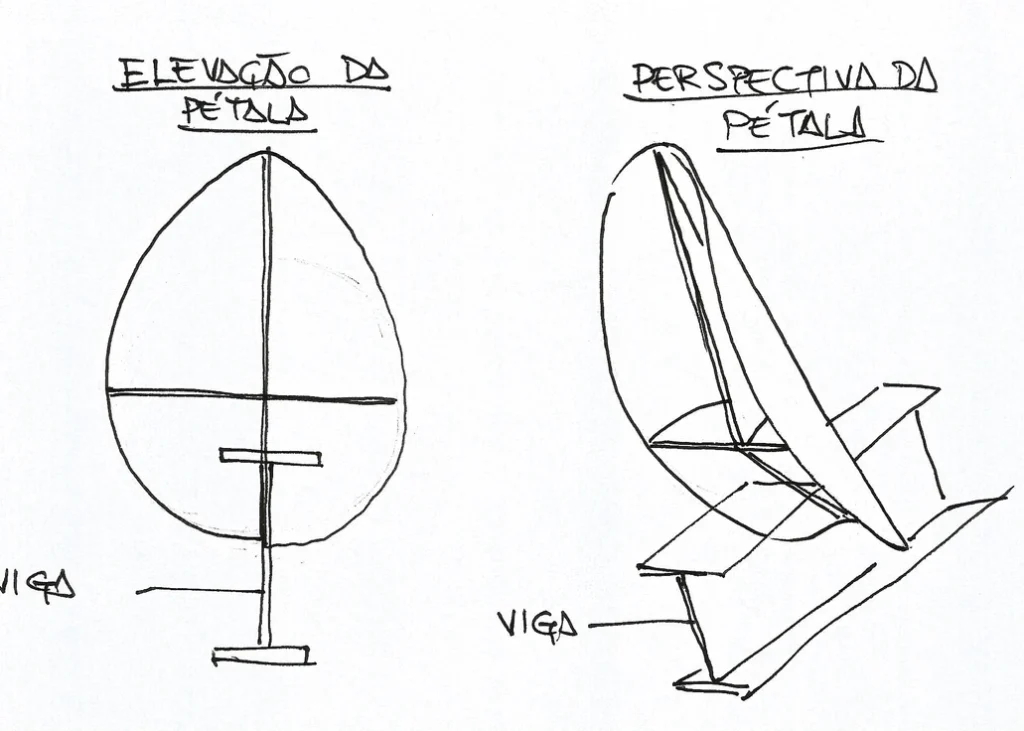
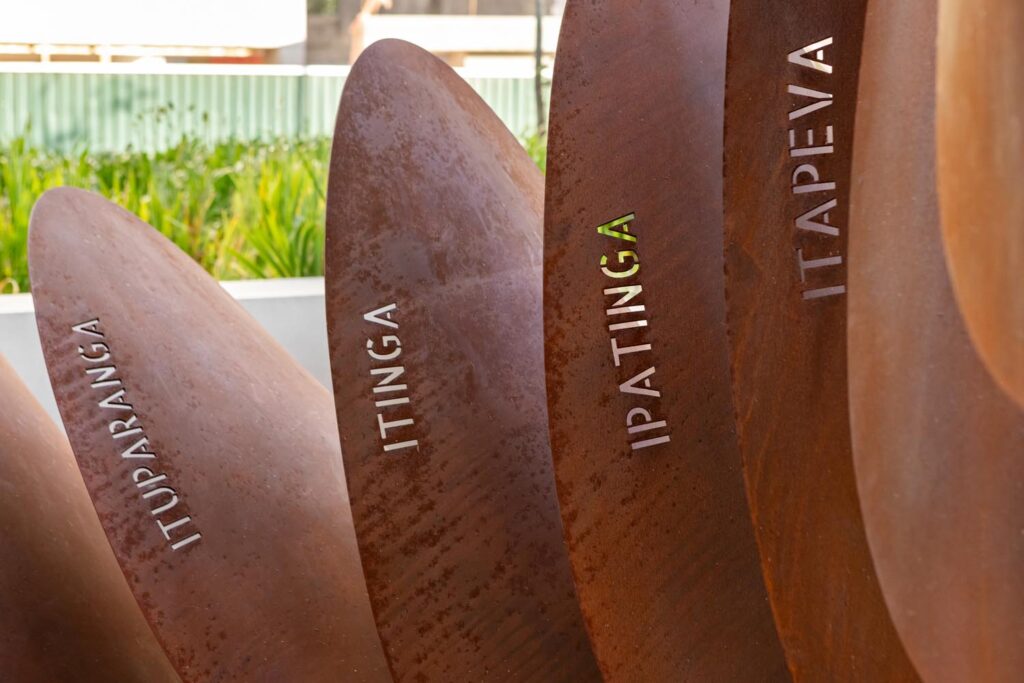
At Sculpture Encounters, we used parametry to create the angulation and size variation of the sculpture’s petals to achive the desired effect. Despite the rigidity of the material, the petals in sequence create an effect of movement and fluidity, forming this large meeting wheel.
Identity.
It is important to lose a Eurocentric narrative that concentrates the history of native peoples only in the period before the “arrival of the white man”. Therefore that it is possible to understand how the colonization of Sorocaba – and Brazil – took place strongly with the indigenous presence, directly influencing our current culture. The Sorocaba region was a network of great commercial exchange between the Incas and the Brazilian natives.
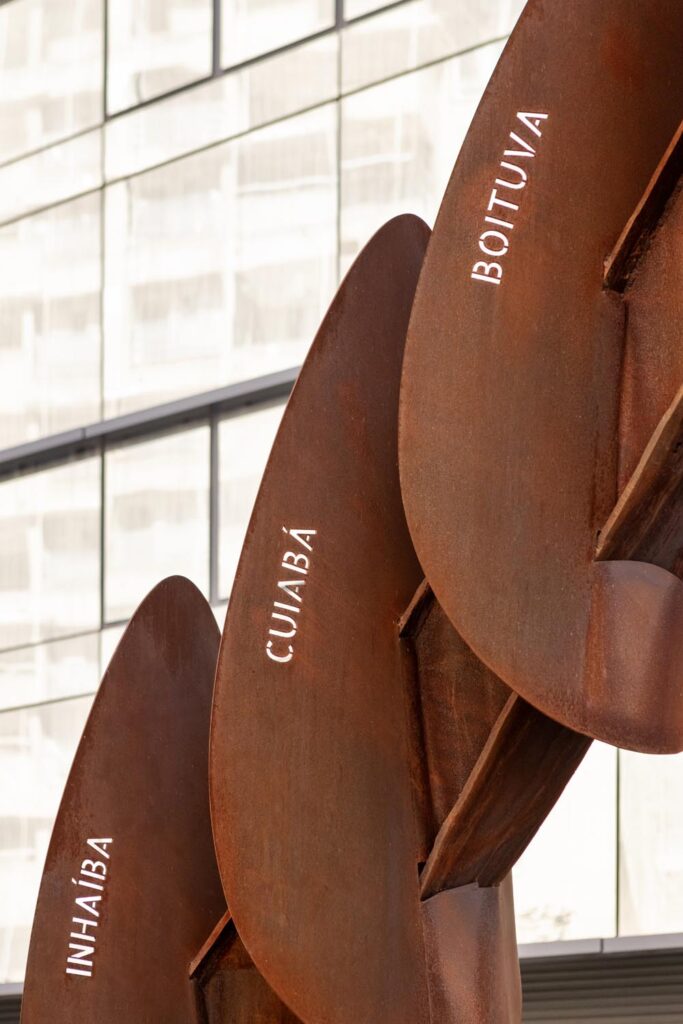
According to scholars, it is possible to say that toponyms are nomenclatures that entered recent history as legacies of the Tupi language, as a result of contact and cultural exchange, mostly non-peaceful, between natives and colonizers. We use the most well-known toponyms in the region, still used today to name places in the surroundings, creating a relationship of affection and meeting of the local population with the art installation.