
GUTO REQUENA
Guto Requena is an architect, researcher, and communicator. He develops projects that connect technology, nature, and human relationships, exploring light, sound, and data to activate sensitive spaces. Internationally recognized for works honored with the iF Design Award Gold, the Architecture MasterPrize, and the Prix Versailles, his work moves between architecture, installations, and urban projects, having been presented in more than 20 countries.
A graduate in Architecture and Urbanism from the University of São Paulo (IAU-USP), he spent nine years as a researcher at Nomads.USP, the Interactive Living Studies Center. His master’s dissertation gave rise to the book Habitar Híbrido: Subjetividades e Arquitetura do Lar na Era Digital (published by Editora Senac).
Since 2022, he has been a visiting professor at Université Sorbonne Paris 1, and since 2025, creative consultant for Senac São Paulo. He currently divides his time between São Paulo and Lisbon, cities that host his studios. In 2026, he began his PhD at the University of Lisbon (Instituto Superior Técnico), as a researcher at the Interactive Technologies Institute.
At the center of his work lies a question that runs through cities, screens, and bodies: can affect be designed? Pursuing this answer leads him to the decolonization of the act of designing itself, to listening to indigenous knowledge, and to understanding architecture as a living organism, in relation to the earth and to the other. Between the algorithmic and the ancestral, his practice bets on environmental regeneration and empathy as raw material for possible futures.
AWARDS
talks
EXHIBITIONS
press



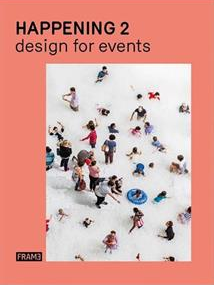



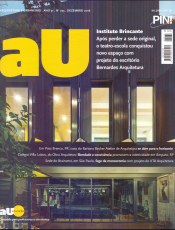





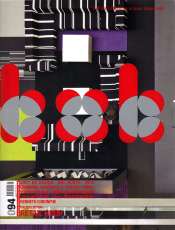
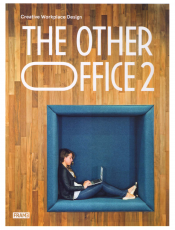










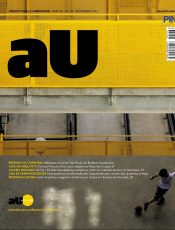
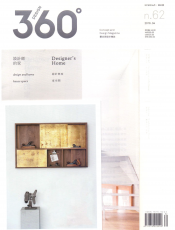



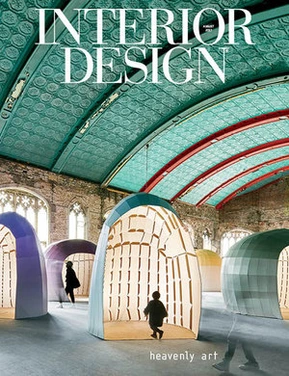





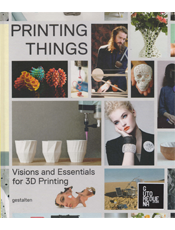

















team
PHD
Fostering Empathy through Interactive Urban Installations: Design Methodologies and Emerging Technologies for Decolonial Futures.
For nearly twenty years, architect Guto Requena has investigated how design and emerging technologies can foster empathy in collective spaces. Projects such as Love Project, Dancing Pavilion, Mapped Empathies, and My Heart Beats Like Yours used biofeedback sensors, 3D printing, and kinetic façades to transform heartbeats, testimonies, and affection into shared urban experiences. This trajectory is the starting point for his doctoral research (2026–2030), which investigates how interactive urban installations can foster empathy in collective spaces. The research begins with a central question: in an era of global polarization and climate emergency, can empathy be cultivated through design and emerging technologies? To address this, the project proposes to decolonize the thought processes behind design and urban planning, moving beyond a Western tradition that has historically privileged a European, patriarchal, white, and binary worldview, while recognizing the relevance of Indigenous knowledge systems that intrinsically connect human well-being, nature, and other forms of more-than-human intelligence.
The PhD is conducted at Instituto Superior Técnico (IST), University of Lisbon, the largest and most prestigious university in Portugal. As a researcher, Requena is part of the Interactive Technologies Institute (ITI), an interdisciplinary research institute dedicated to the field of Human-Computer Interaction (HCI), bringing together researchers from engineering, design, the social sciences, the arts, and the humanities to investigate and understand the relationships among technology, humans, and ecosystems. ITI is a co-founder of LARSyS – Laboratory for Robotics and Engineering Systems, an internationally recognized reference in robotics and engineering systems. The research is supervised by Prof. Nuno Jardim Nunes, president and founder of ITI, with co-supervision by Prof. Mariana Pestana.
The project is structured around two complementary strands. The first concerns the physical support of the installations, with an emphasis on sustainable, decarbonized solutions, exploring digital fabrication and bio-based materials. The second involves their technological content: software, sensors, microcontrollers, and artificial intelligence systems capable of expanding the possibilities of design. At this stage, the research also seeks to map, through data analysis and AI, how and why social engagements occur in collective spaces.
Aligned with the United Nations Sustainable Development Goals (Sustainable Cities and Communities, and Climate Action), the objective of this doctorate is to develop new design methodologies — tested through physical and digital prototypes — that help cultivate intersectional, intercultural, intergenerational, and interspecies forms of affection in urban spaces.