
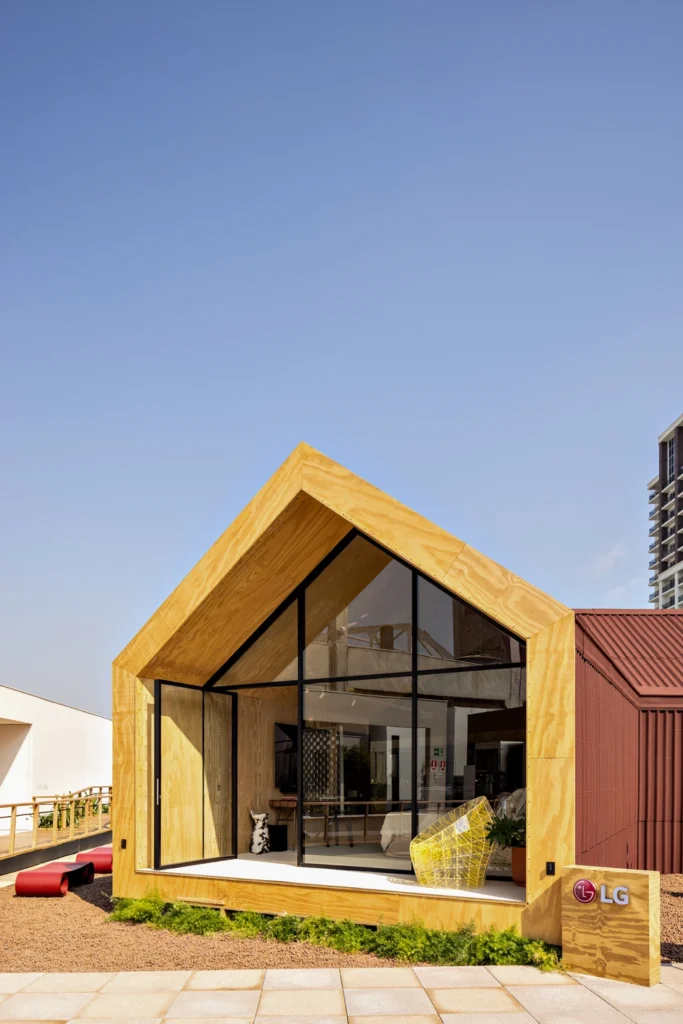
Connected Home
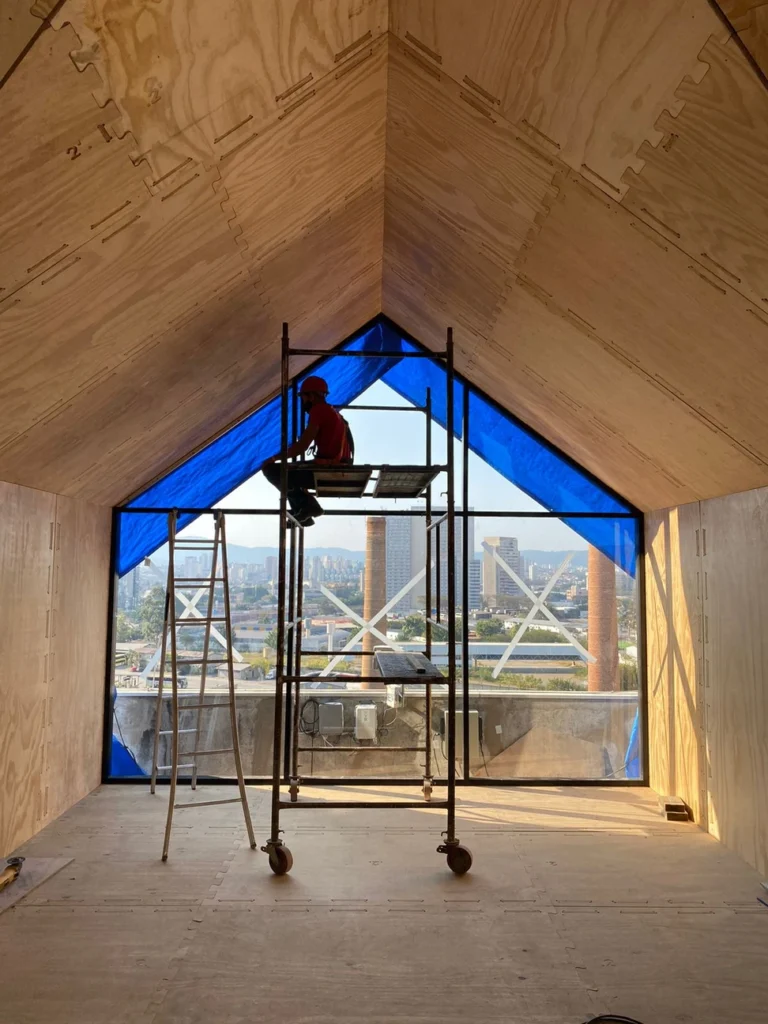
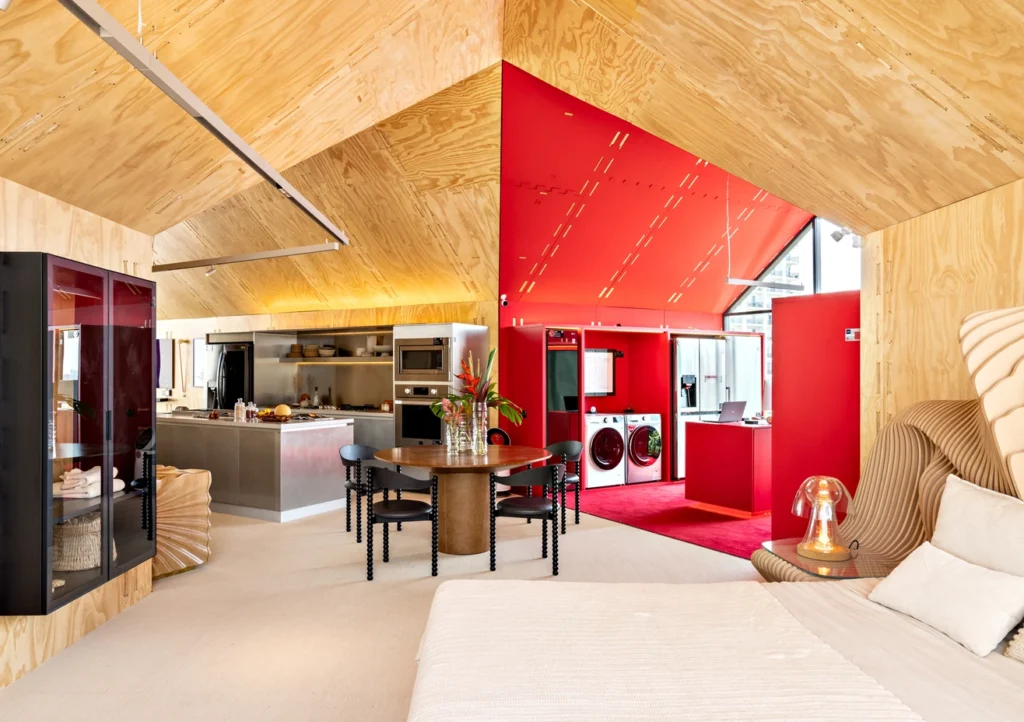
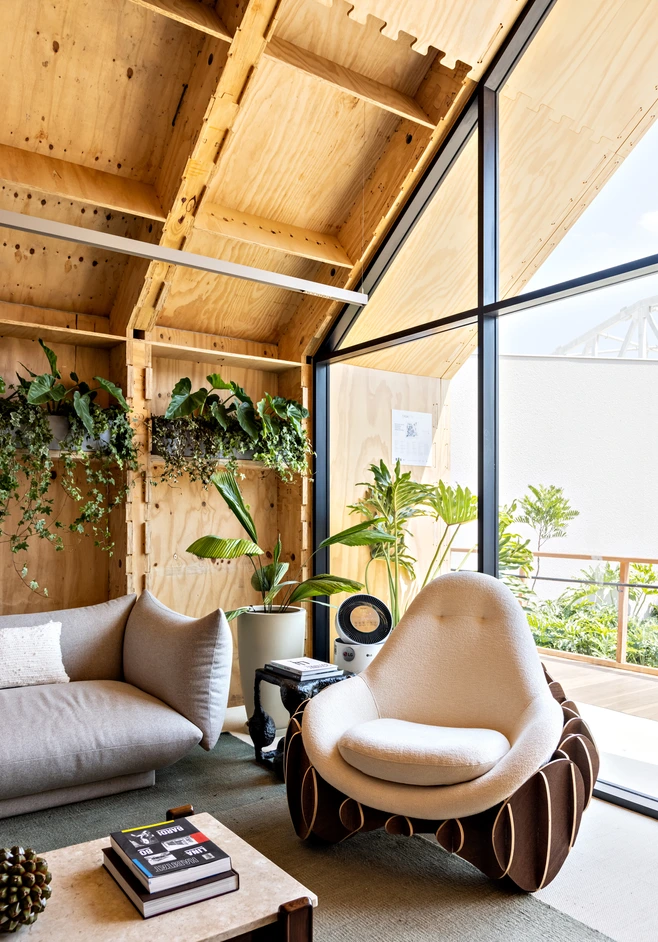
The external structure is covered with waterproofed vegetable fiber tiles, a type of light covering, made from recycled paper. Inside the House, the wooden panels are the finishing, bringing comfort and elegance. They are the setting for the mix of Brazilian design furniture and works of art selected by Guto Requena, from the rich collection of Galeria Nara Roesler.
The interior space consists of a living room, dining room, kitchen, bedroom, two balconies and LG showroom. All materials and finishes were designed to generate a minimum of non-recyclable waste. The Stainless-Steel Kitchen was specially designed for the LG ThinQ House, which allows for a smooth surface that meets the legal requirements of hygiene, from the use of stainless steel that stands out for its high performance, durability and for being fully recyclable.
The curatorship of furniture and objects by Guto Requena seeks to present ascendant names of Brazilian design, added to classics, such as Jorge Zalszupin by Etel Design, Pax.Arq, Studio Rain by Breton, Daniel Jorge, Karol Suguikawa, Humberto da Mata, Lucas Neves, Marcelo Ligieri, Inês Schertel, Alva Design and Maria Cândida Machado (Dpot). Among the furniture, part of the products is designed by Estudio Guto Requena, such as the Alma Lamp, the Nóize chair, the Delírios armchair, vases Once Upon a Time and the Love Project. In addition to the launch of the new pieces as Buffet Attraction, Dreaming Bed and Heartwall, both digitally designed through parametric programming and manufactured in CNC, in a similar language to the structure concept of the house.
Design, art and technology integrated to build a Connected Home. A possible alternative for a sustainable future.
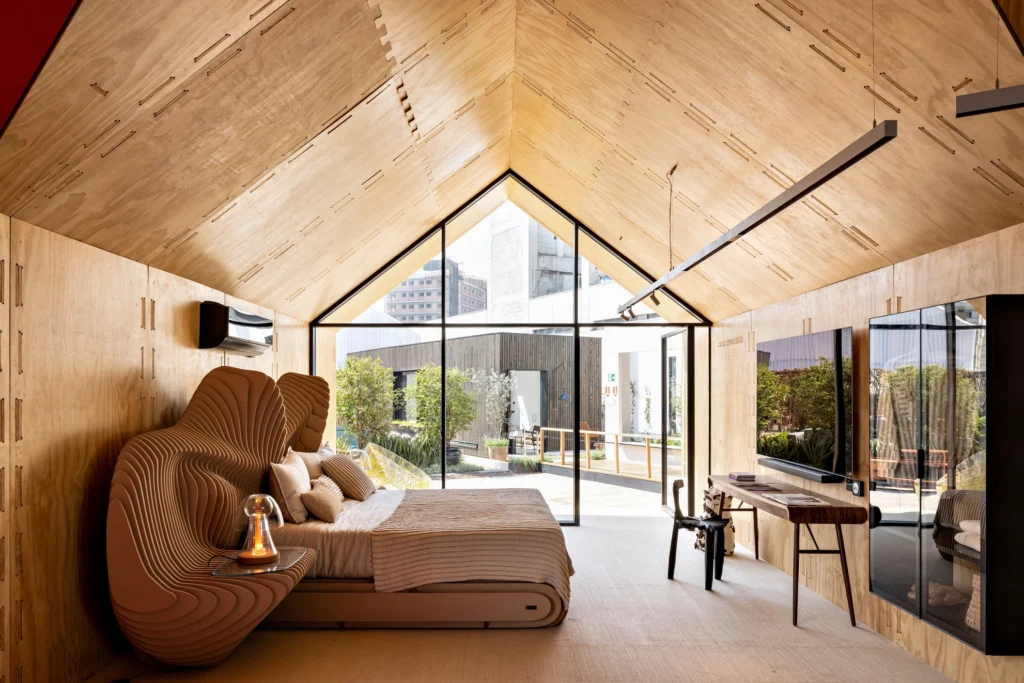
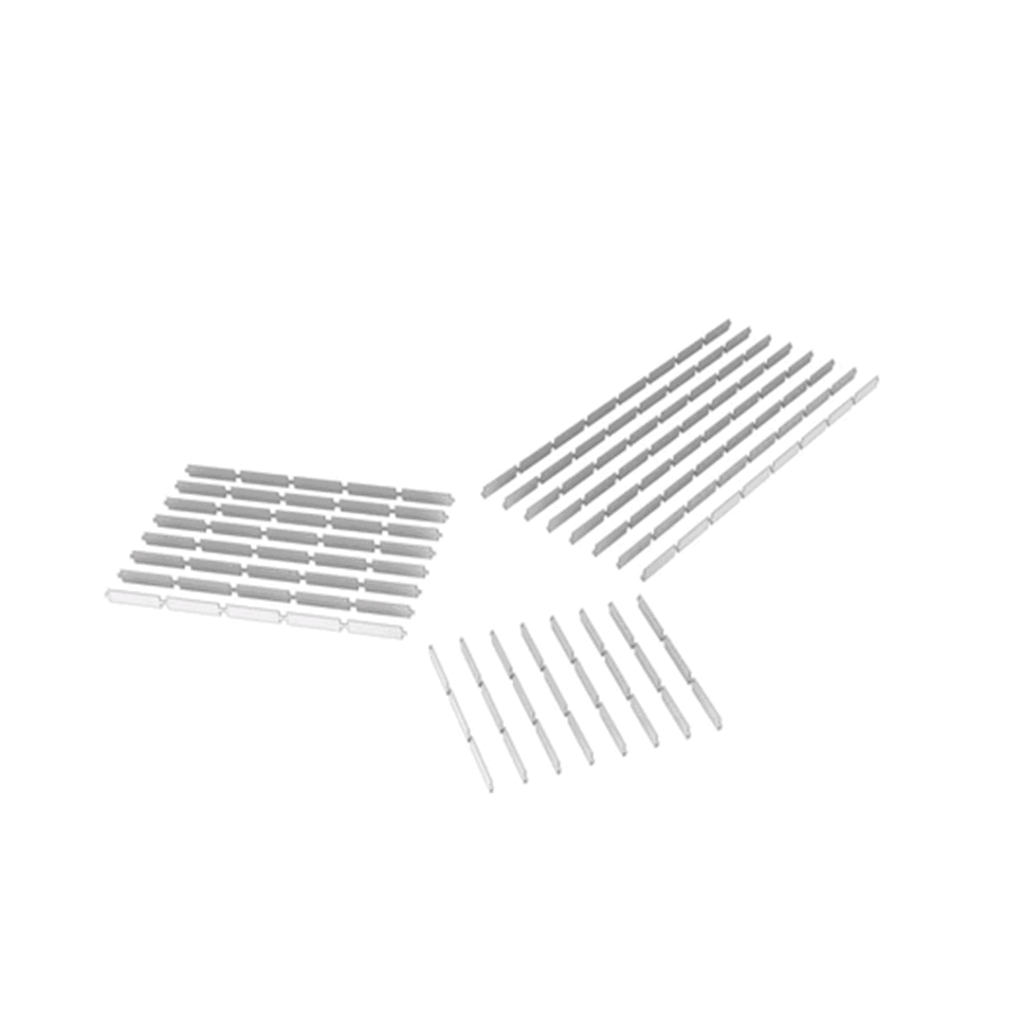
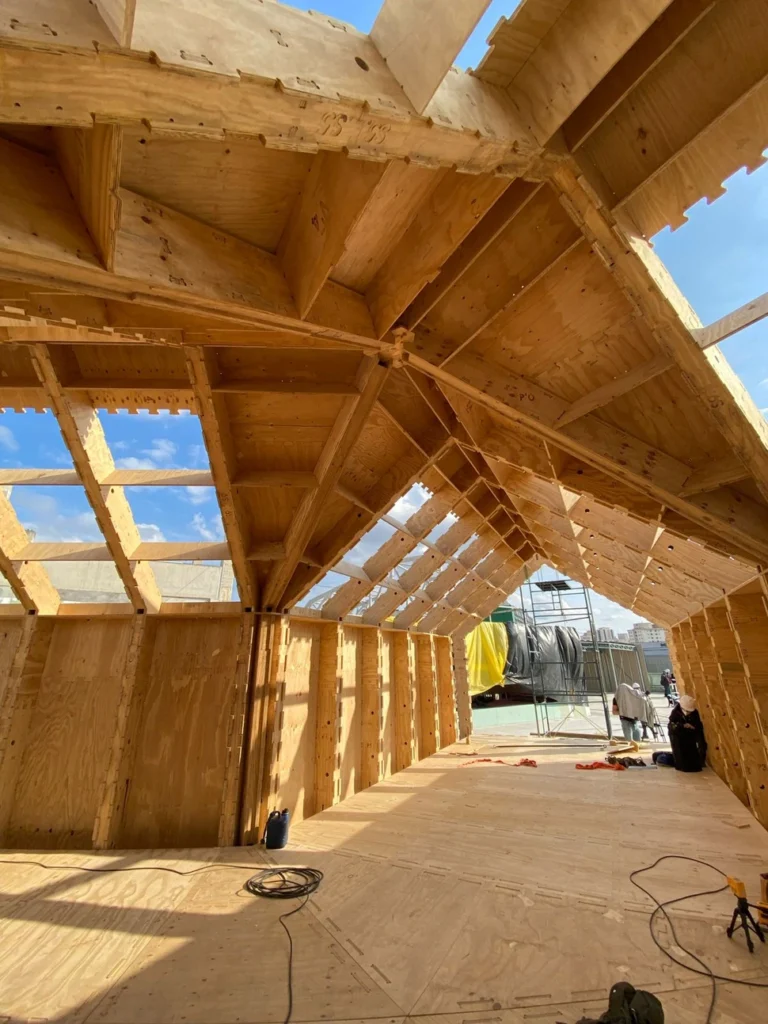
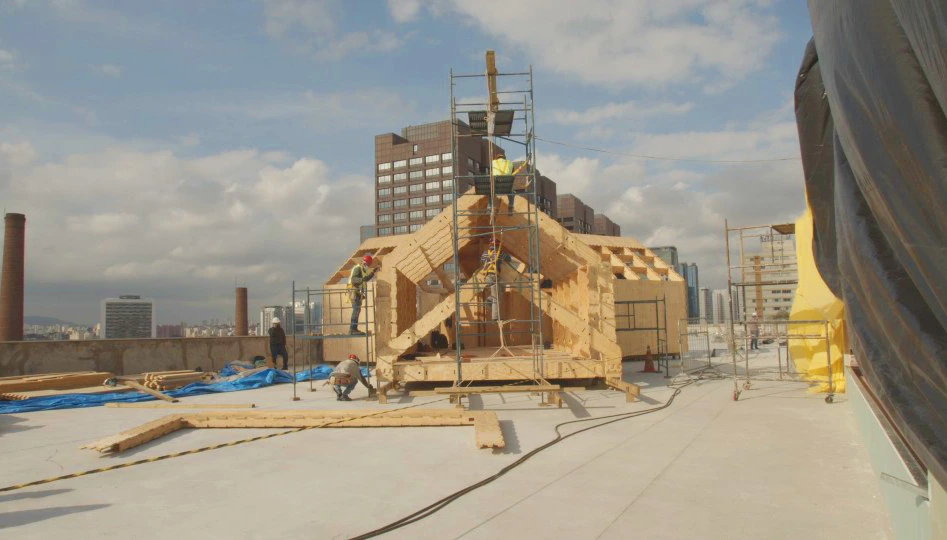
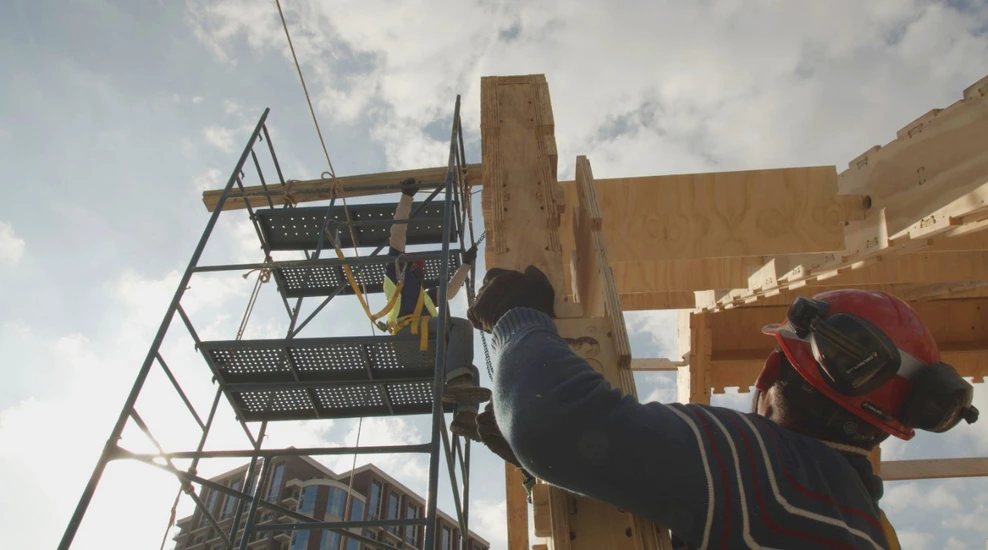
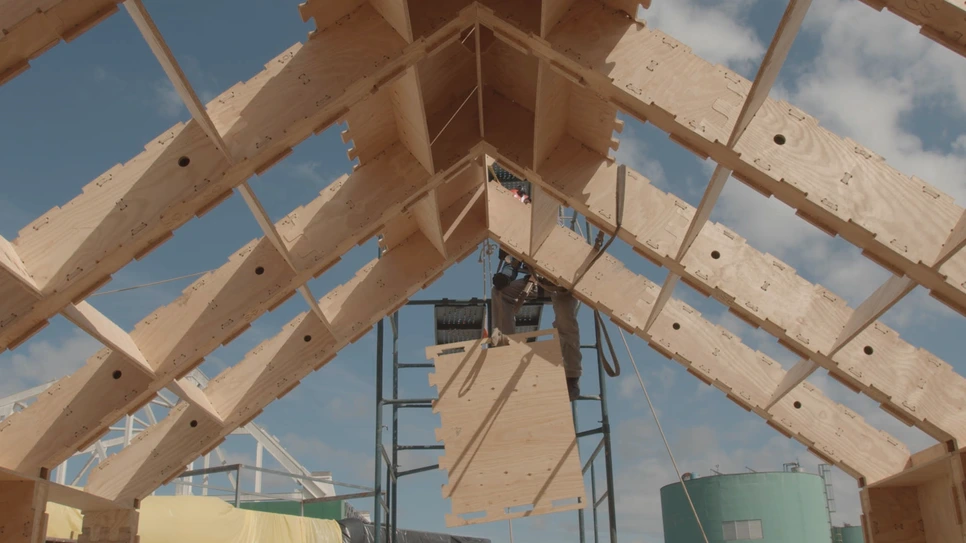
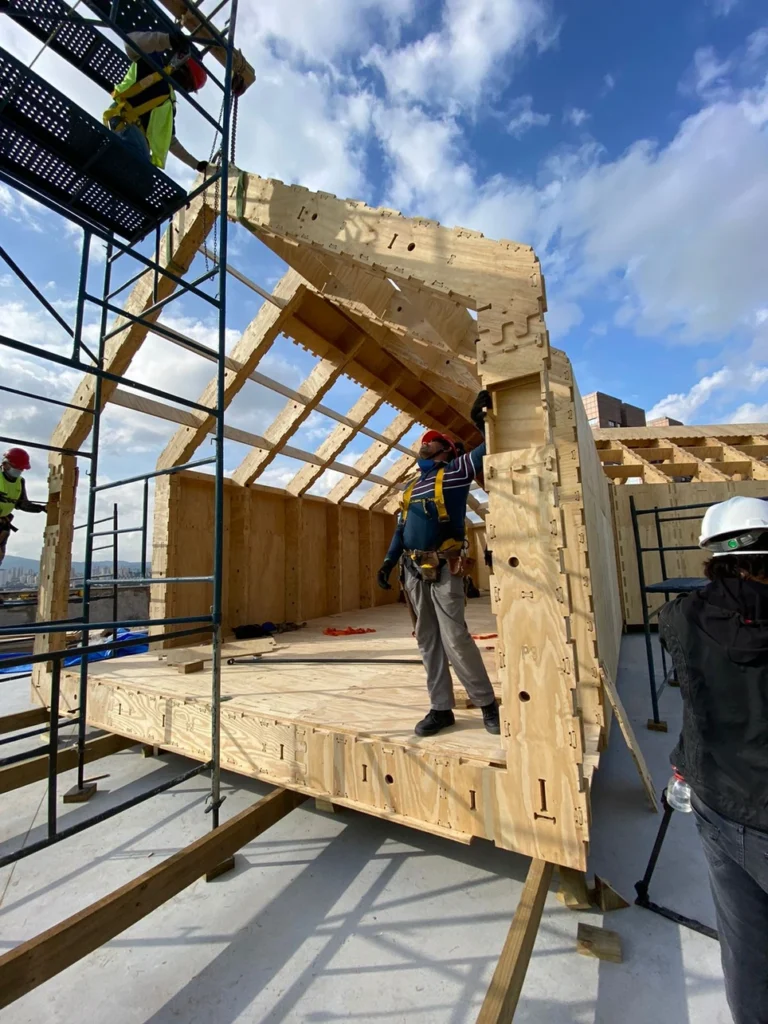
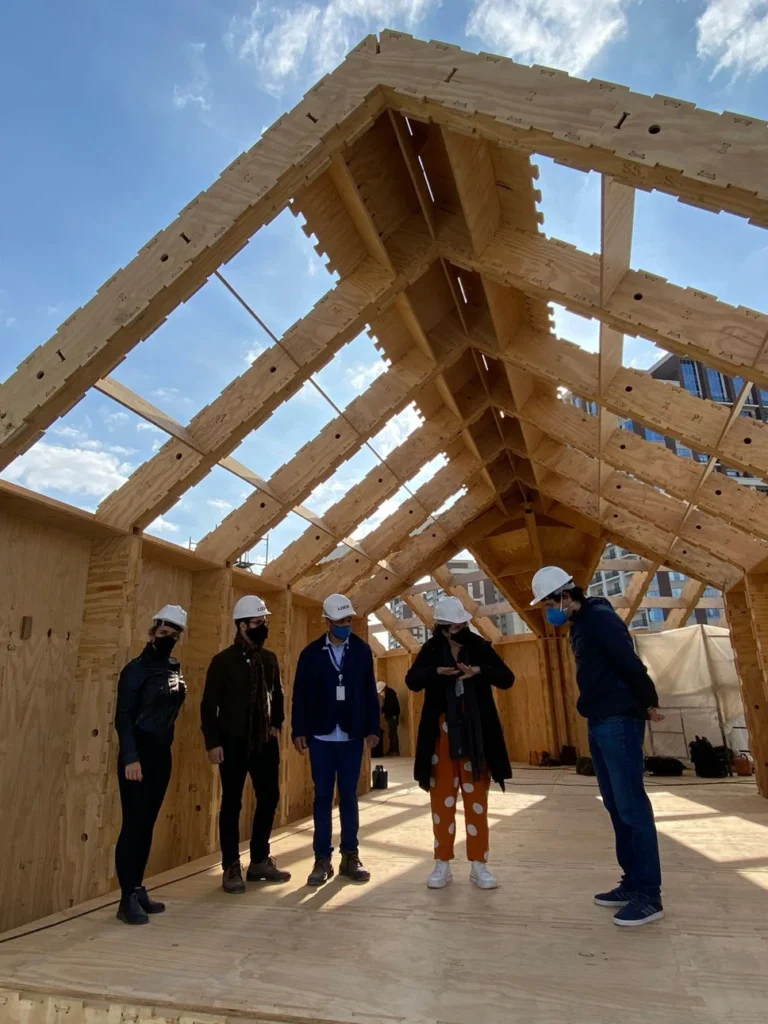
LG ThinQ Home is an open-source project, which intends to democratize and simplify sustainable housing construction. Built from naval pine plywood boards, machined by mechanical hand and assembled by fittings resulting in a 0% impact of residue on the work.
The smart automation system helps to reduce electrical energy consumption by automatically switching off the lighting at scheduled times and adjusting the light intensity according to daylight. The absence of infrastructure and reduction of materials, given the use of wireless sensors, reduces the impact of waste in construction and allows the reuse of 100% of equipment at the end of the event.
Tile made of vegetable fibers waterproofed with asphalt and thermoset resin. The color is composed of mineral pigments. It is a lightweight cover system. The tile has EDP Sustainability certification, which guarantees the use of more than 50% of the material recycled in its manufacturing process. In addition, the tiles contribute to obtaining Green Ratings in sustainable projects.
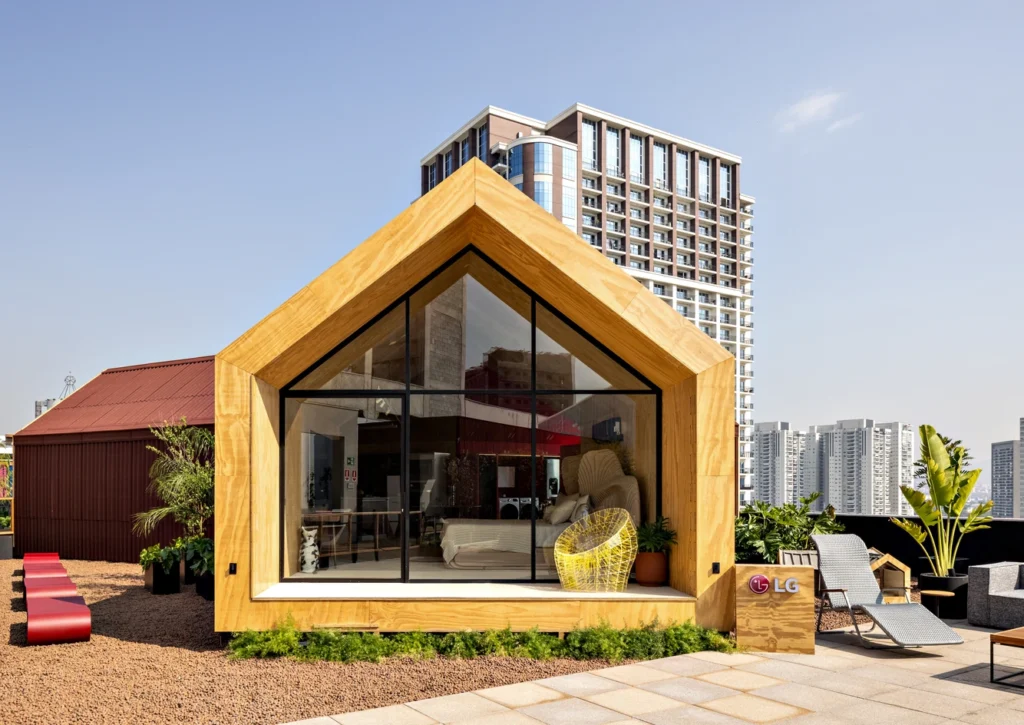
The External floor is draining which contributes to rainwater runoff and soil drainage. On the ramp, an antibacterial floor was used, indicated to collaborate with the internal asepsis of the house and very convenient in combating Covid.
The showroom’s interior floor, Econyl Regenerated Nylon, is made entirely from ocean and landfill waste such as industrial plastics, fabric scraps from apparel companies, old rugs and “ghost nets.”
Revolution® is used inside the house. It is a floor made of vinyl and polyester, which allows high resistance and practicality in its use. Indicated for high traffic areas, it is easy to maintain and clean, and can be used indoors and outdoors. The carpet has a textured, non-slip and pleasant-to-touch weave, which is great for thermal and acoustic insulation.
Kitchen countertops are made with Hybriq Quartz, an innovative generation of surfaces composed of a high-performance hybrid formulation of premium minerals, quartz and recycled glass.
LG products combine design, artificial intelligence, sustainability and health care that stand out in the environment. We highlight the Oled evo TV, a great launch of the brand with a slim design and high technology, it can work as an automation hub for the LG ThinQ and allows all the control of the home appliances through its panel.
Kitchen in Stainless Steel Evviva – designed especially for the LG ThinQ House, with fronts and tamponade in this noble material – considered a sustainable material, ecologically correct and 100% recyclable. Stainless steel stands out for its resistance, durability and for meeting the legal requirements of hygiene (it is a smooth and non-porous surface, not accumulating fungi and bacteria).